The easiest way to sleep on a bus is to grab a window seat toward the front, bring a travel pillow, an eye mask, and earplugs, dress in soft layers, stop caffeine about six hours before you want to sleep, and swap your phone screen for a podcast once the lights go down. Sounds simple, right? It is! Nail those basics and you'll step off without a stiff neck, and sleeping on a bus gets so, so much easier, whether you're riding with the church choir from Dallas to Houston, dozing through a band trip to Orlando, or catching a quick power nap on the way home from a weekend tournament!
Every tip below is built for a moving bus, with sleep and travel health facts checked against the CDC, Mayo Clinic, and the American Academy of Sleep Medicine. You'll also find the most comfortable sleeping positions on a bus and which bus types are easiest to rest on. And if your group hasn't locked in the ride yet, Partybus.com lets you compare charter buses with high-back reclining seats, minibuses, and sprinter vans from a large network of bus companies, so the bus itself helps you get some sleep! Call 877-563-2133 or get online pricing in just 30 seconds to find a bus your whole group can actually rest on.
1. Choose a Window Seat in the Front Half of the Bus
Picking the right seat is the single biggest thing you can do to sleep on a bus, because it decides how much of every pothole, lane change, and brake tap you actually feel. On most full-size charter buses, the engine sits at the very back and the onboard restroom usually does too, so the last few rows get the most rumble, the most hum, and a steady parade of people shuffling past your armrest at 2 a.m. Skip the back row. Head for a seat in the front half of the bus instead, and you'll feel the difference by the first exit!
Prone to motion sickness? Sitting up front is exactly what the CDC's motion sickness tips for travelers recommend on a car or bus, along with shutting your eyes, sleeping, or looking out at the horizon. That's great news if you're planning to snooze, since the seat that settles your stomach is the same seat that helps you drift off.
Once you've picked your row, grab the window if you can. You get a wall to lean on, control of the curtain when the afternoon sun or the highway lights hit, and nobody climbing over your knees on the way to the restroom. The window seat wins for leaning, no question. The catch comes on long overnight rides, when an aisle seat makes it easier to hop up and stretch at every stop (more on why that matters in tip 7), so taller riders and anyone who likes to move around may be happier on the aisle.
2. Dress in Soft Layers and Keep a Blanket in Your Carry-On
Comfortable clothes matter more than most people think when you're trying to sleep on a charter bus for hours at a time. Stiff denim, tight waistbands, and short skirts make it tough to curl up or tuck your knees, so go with stretchy leggings, joggers, or athletic wear, plus socks and slip-on shoes you can kick off once you settle in. No belt buckle digging into your stomach. No zipper pressing into your hip. No scratchy tag rubbing the back of your neck all night long.
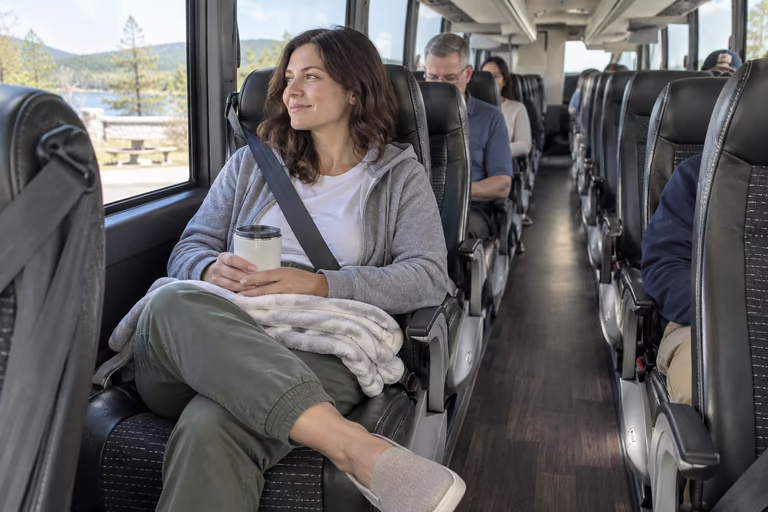
Why layers? Most charter buses come with climate control and overhead air vents above the seats, and a cabin that feels perfect at a 3 p.m. departure can feel chilly by midnight once everyone opens their vents. A hoodie or light jacket lets you adjust without waking up shivering, and a soft travel blanket works double duty as a lumbar pillow when you roll it up behind your lower back. Plus, you can point your own overhead vent away from your face before you close your eyes, so you're not waking up an hour later with cold air blowing on you.
Where you pack it matters, too. Keep that blanket, hoodie, and sleep gear in the small bag that rides with you in the overhead bin, not in the suitcase that goes down into the undercarriage luggage bays. Once the bus is rolling, those bays stay shut until the next stop, so anything you tossed underneath is out of reach for the whole ride!
3. Bring a Travel Pillow, an Eye Mask, and Earplugs
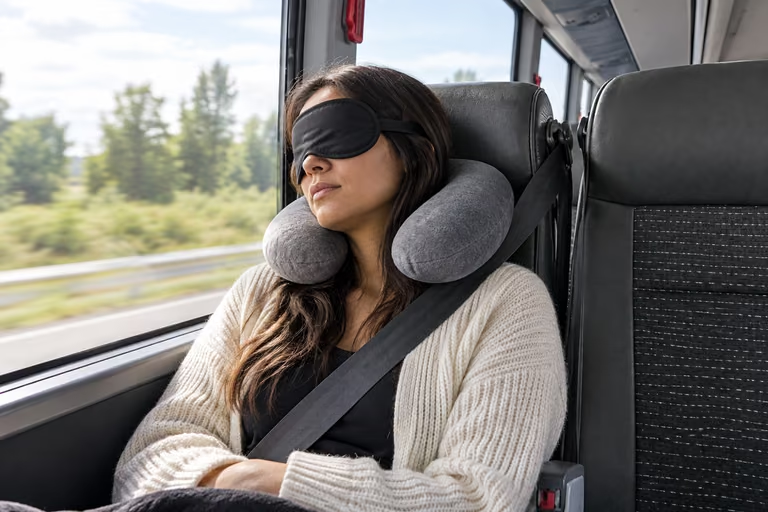
Trying to sleep on a bus sitting up? A good neck pillow keeps your head from bobbing forward or tipping sideways every time the bus changes lanes, and it does more than stop the dreaded head drop. The CDC Yellow Book chapter on motion sickness lists holding your head firmly against the back of the seat as one way to cut down on how much motion you perceive, and a snug travel pillow does exactly that while you doze. Memory foam, inflatable, or the wraparound kind with chin support all work, so pick the one you'll actually remember to bring.
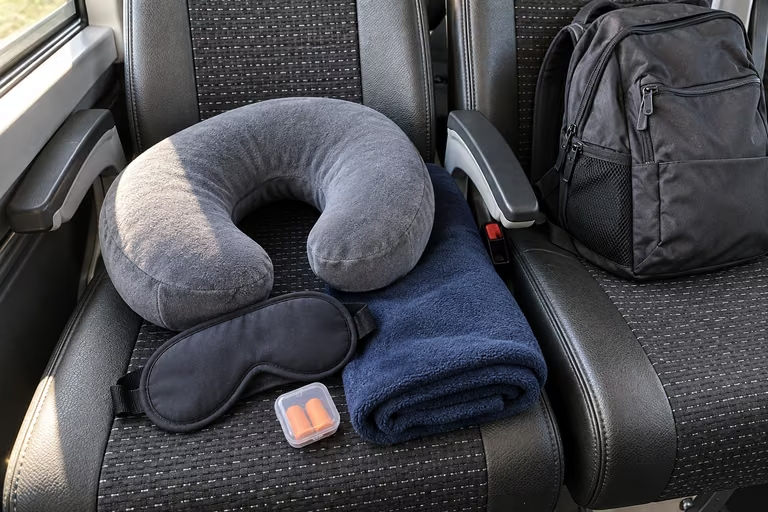
Next up is your eye mask. Even with the cabin lights down, a bus at night still has passing headlights, gas station canopies, the reading light two rows up, and somebody's phone glowing across the aisle. A contoured eye mask blocks all of it without pressing on your eyelids, and it's especially handy on a daytime ride when the sun is pouring through the window beside you.
And don't forget your ears! Foam or silicone earplugs take the edge off engine hum, road noise, and the group in the back row that is DEFINITELY not sleeping, while noise-canceling headphones or earbuds do the same job with a playlist on top. If your trip has a group leader making announcements over the bus PA system, keep one earbud loose or set a quiet alarm so you don't sleep straight through the stop where everyone grabs dinner.
4. Try These Comfortable Sleeping Positions on a Bus
The most comfortable sleeping position on a bus is one that keeps your head supported and stops your spine from slumping sideways, and a few simple setups get you there. Start by sitting all the way back, so your lower back rests snug against the seat instead of sliding forward, then pick the position that fits your seat and your body.
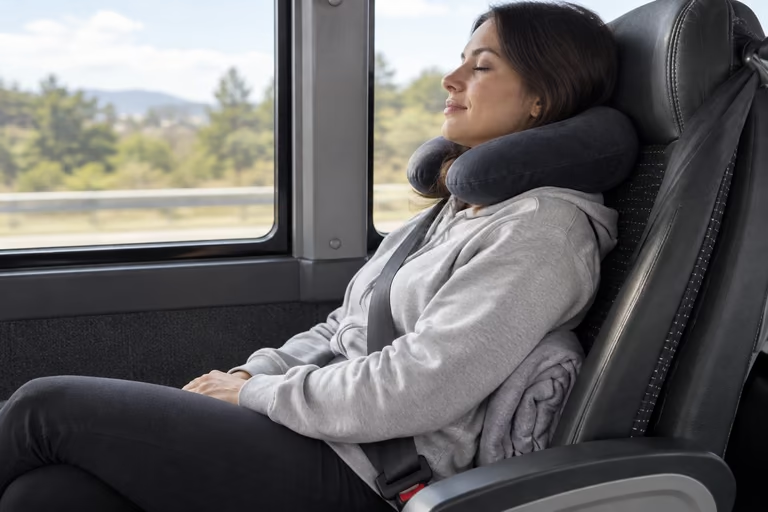
Got the window? Wedge your travel pillow or a folded hoodie between your head and the wall, angle your knees slightly toward the window, and let the side of the bus hold you up. Stuck on the aisle? Turn your neck pillow so the thickest part sits under your chin or against the shoulder you lean toward, and cross your arms loosely over your chest so your elbows stay out of the aisle. Seat reclines? Ease it back, rest your head against the seat back, and let the pillow keep your neck straight.
Then there's the forward lean. Set your backpack or a pillow on your lap, fold your arms on top, and rest your forehead there, which works well on school buses and minibuses where the seats don't recline much. Whatever position you choose, keep your feet flat on the floor or stretched under the seat in front of you, and switch sides every so often so you don't wake up with a crick on one side of your neck. Small tweak, big difference.
5. Swap Bright Screens for Podcasts, Audiobooks, and Playlists
Lots of charter buses and minibuses come with TV monitors mounted through the cabin, which is great for a movie on the way to the lake and not so great when you're trying to fall asleep on the bus two hours later. Harvard Health's guide to blue light and sleep explains that light at night suppresses melatonin and that blue light does it more powerfully than other light. The same guide notes that even dim light around eight lux (about twice the brightness of a night light) can have an effect, which is why it recommends avoiding bright screens for two to three hours before bed.
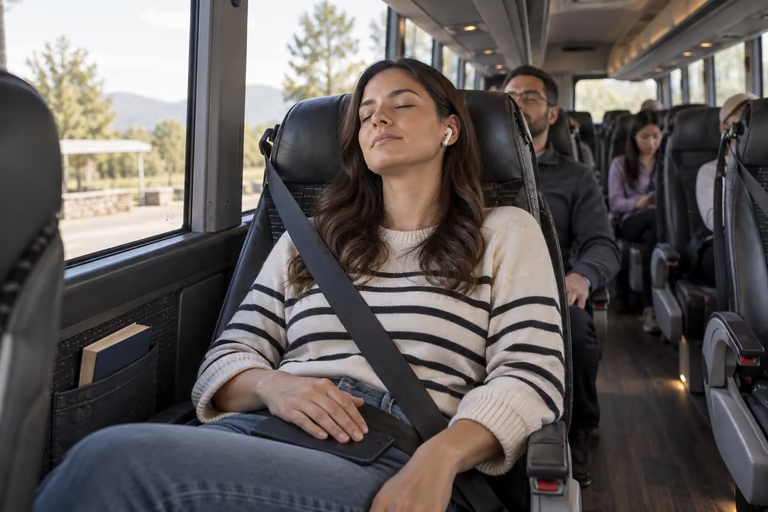
On a bus, that means your eye mask from tip 3 earns its spot, and it means scrolling your phone right up until you want to sleep is working against you. Load a podcast, an audiobook, a sleep story, or a mellow playlist before you board, turn your screen brightness all the way down, and tuck the phone away once you press play. Organizing the trip? Get the group to agree on a "movies off" time so the monitors aren't glowing over the whole cabin for the rest of the night.
Love reading on the road? A paperback can still lull plenty of riders to sleep, and it keeps a bright screen out of your face. If reading in a moving vehicle usually makes you queasy, though, stick with audio and let your eyes close instead.
6. Time Your Coffee, Water, and Snacks Around the Rest Stops
That gas station coffee at the afternoon stop can cost you more sleep on the bus than you'd guess. In a study published in the American Academy of Sleep Medicine's journal, 400 milligrams of caffeine (about two to three cups of coffee) taken six hours before bedtime cut total sleep time by more than an hour, and participants didn't even notice the difference. So if you're hoping to sleep on an overnight bus, count back six hours from when you want to be asleep and make that your last big coffee, energy drink, or soda.
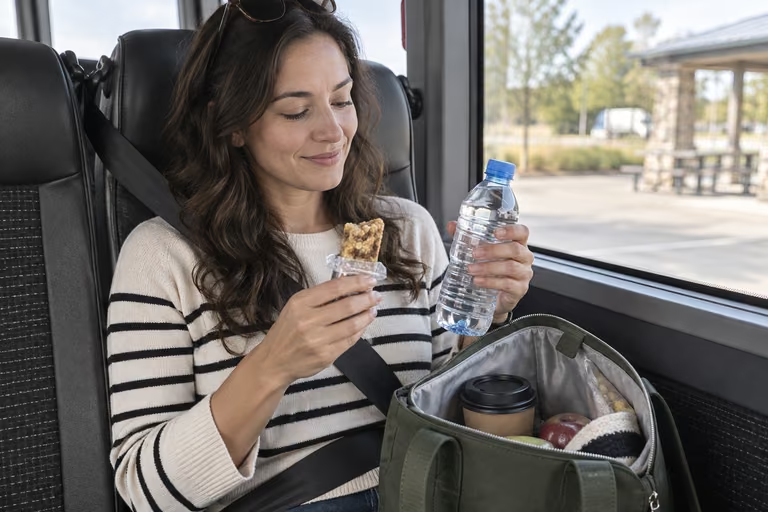
Water takes a little strategy. Staying hydrated keeps you comfortable, and the CDC's motion sickness tips also call for drinking water, eating small amounts of food often, and limiting alcohol and caffeine. Chug a whole bottle right after you board, though, and you'll be up and down the aisle all night. Sip steadily instead, and save bigger drinks for right before a rest stop so you can take care of business while the bus is parked.
Does your bus have a restroom? Not every one does. Many full-size charter buses carry an onboard restroom, but it's a feature you request rather than assume, and most minibuses and sprinter vans don't have one, so on those rides your water schedule and the stop schedule need to line up. Mention planned stops and a restroom request when you ask for your quote, and pack light, easy snacks like nuts, crackers, granola bars, or dried fruit in your carry-on so a growling stomach doesn't wake you at 1 a.m. Need ideas? Check out our favorite road trip snacks for long bus rides.
Heading home on a party bus after a big night? A few drinks might make you feel drowsy on the ride back, but an NIH-hosted research review on sleep and alcohol found that high alcohol doses can disturb sleep during the second half of the night. Pace yourself if the bus drops you off with an early morning waiting.
7. Keep Naps to 20 or 30 Minutes, or Plan for a Full Overnight Sleep
How long you sleep on a bus should depend on how long the ride is and what's waiting at the other end. For a quick power nap between stops, Mayo Clinic's napping do's and don'ts say a 20- to 30-minute nap is ideal, that longer naps make you more likely to wake up groggy, and that this grogginess (called sleep inertia) often fades within about 35 minutes. Mayo also notes that napping after 3 p.m. can make it harder to sleep soundly at night.
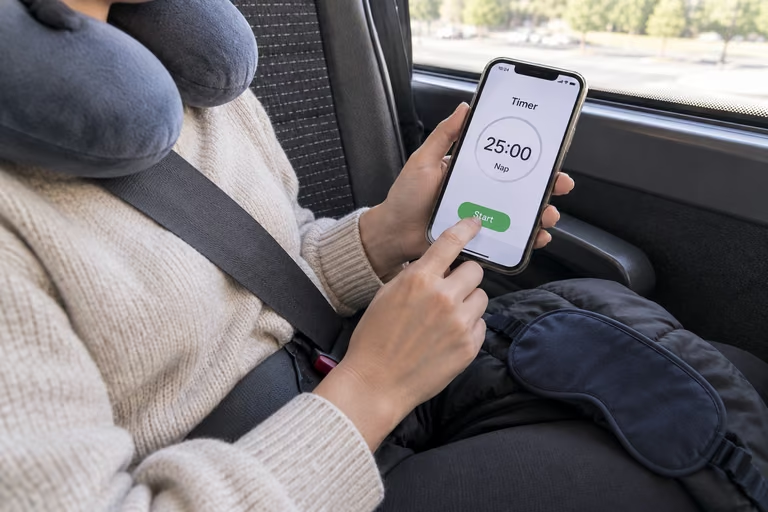
Put that to work on the road. Set a vibrating alarm for 25 minutes if you just need a recharge, and if you're sleeping longer, set it to wake you at least 35 to 40 minutes before the bus arrives. That way the fog has lifted by the time you pull up to the hotel, the tournament fields, or the tailgate lot, and you're not stumbling off half-awake while everyone else grabs their bags. Rolling home late in the afternoon? A short snooze beats a two-hour one, so you can still fall asleep in your own bed that night.
Riding overnight or longer than four hours? Build movement into the plan. The CDC's page on blood clots and travel explains that anyone traveling more than four hours by air, car, bus, or train can be at risk for blood clots, and while the risk is generally very small, it grows the longer you stay still. So when the bus stops for fuel or food, get off, walk a lap, and stretch your calves before you settle back in. Between stops, flex your ankles and shift positions every so often, and if you have your own risk factors for clots, talk with your doctor before the trip.
Before you lean your seat back for the long haul, take a quick peek behind you. Reclining slowly saves the laptop, the coffee, and the knees of the person in the next row, and everybody on the bus sleeps better when nobody gets jolted awake.
8. Do a Test Run of Your Bus Sleep Setup Before the Big Trip
Want to know if your sleep kit actually works before you're 200 miles from home? Give it a test run. Wear your travel pillow and eye mask as a passenger on an hour-long car ride, try your earplugs during an afternoon nap in a recliner, or ride a city bus across town with your headphones on, and pay attention to what bugs you. Pillow too tall? Mask too tight? Earplugs popping out every time you turn your head? Much better to find out on a Tuesday afternoon than at midnight on the interstate!
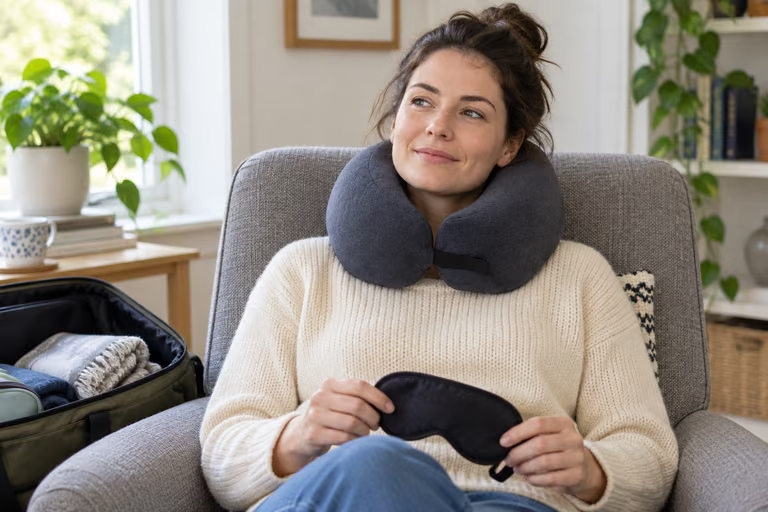
A test run also helps you build the grab-and-go bag that rides in your overhead bin. Charge your headphones the night before, download podcasts and playlists so you aren't depending on WiFi or cell signal through rural stretches, and pack your pillow, mask, earplugs, blanket, charger, water bottle, and snacks in one small bag you can reach without standing up. Ten minutes of prep the night before. Hours of better sleep on the bus!
9. Talk to Your Doctor Before Using Sleep Aids or Motion Sickness Medicine
Plenty of travelers reach for an over-the-counter sleep aid or motion sickness pill before a long bus ride, and for some people that's a helpful option. It's a decision to make with your doctor or pharmacist before the trip, though, not in the gas station aisle an hour before the bus leaves, because your health history, your medications, and your age all change the answer.

Melatonin is one of the most popular picks. The NIH's melatonin fact sheet from the National Center for Complementary and Integrative Health says research suggests melatonin supplements may help with jet lag, which is useful to know if your group flew in across a few time zones before boarding the bus. It also cautions that "natural" doesn't automatically make a supplement harmless and encourages you to talk with your health care providers about any supplements you use.
Diphenhydramine shows up in a lot of nighttime sleep aids. The MedlinePlus drug guide for diphenhydramine notes that it's used to treat insomnia in adults but should not be used to make a child sleepy, which matters on family road trips and school bus rides. MedlinePlus also tells you to check nonprescription cough and cold labels carefully before combining products, since they may share the same active ingredient, and that's a smart habit for everything in your travel bag.
Worried about getting carsick? Dimenhydrinate (the ingredient in original Dramamine) is an antihistamine that prevents and treats motion sickness symptoms, and Cleveland Clinic's dimenhydrinate guide says to take it a half hour to an hour before you travel and warns that drinking alcohol with it can increase side effects like dizziness. Because diphenhydramine is an antihistamine too, ask your pharmacist before pairing a motion sickness pill with a sleep aid on the same ride. Get the green light first, then settle into your seat and enjoy the ride!
Which Bus Is Easiest to Sleep On?
The bus you book can make sleeping on the road a whole lot easier (or a whole lot harder) before you ever pack a pillow. If rest is part of the plan, a full-size charter bus rental is the top pick, with room for up to 56 passengers, high-back reclining seats for leaning back on the long haul, and window curtains you can pull when the sun comes up. You also get overhead air vents and reading lights you control from your own seat, plus luggage bays underneath, so suitcases stay out of the aisle and nobody trips over a duffel on the way to the restroom. Many coaches carry an onboard restroom too, which means fewer stops waking everyone up. Just mention it when you request your quote!
Traveling with a smaller group? A 15- to 35-passenger minibus rental offers high-back reclining seats in leather or cloth depending on the model, plus overhead storage compartments, power outlets, WiFi, and more, which works well for a ride of a few hours but usually skips the restroom. For groups of 14 or fewer, executive sprinter vans with reclining captain's chairs give everyone their own space to stretch out. Party buses are a different story. With a full-length bar, color-changing LED lighting, a premium sound system with Bluetooth, flat-panel TVs, and wraparound perimeter seating, they're built for the celebration, not the nap, so they're perfect for the night out and a charter bus is the better bet for the long ride home.
Headed out on a field trip? School buses seat up to 47 on bench seating with no recline, so the best way to sleep on a school bus is to grab a window, ball up a hoodie between your head and the glass, face forward, and keep your feet on the floor. Amenities vary by bus and provider, so for a closer look at every option, check out the complete guide to bus types and the guide to charter bus amenities, or call 877-563-2133 and a live agent can help you match the bus to your route.
How We Put This Bus Sleep Guide Together
Every health and sleep fact in this guide links straight to the source it came from, including the CDC, the National Institutes of Health, MedlinePlus, Mayo Clinic, Cleveland Clinic, Harvard Health, and the American Academy of Sleep Medicine, so you can check anything yourself before your trip. The bus features come from the vehicle types listed on Partybus.com, and because amenities vary by bus and provider, confirm the ones that matter to you when you request your quote. This guide shares general travel information, not medical advice, so talk with your doctor or pharmacist about anything health-related before you ride.
Frequently Asked Questions About Sleeping on a Bus
What is the best seat to sleep on a bus?
A window seat in the front half of the bus is usually the best seat for sleeping. You get something to lean against and control of the curtain, you're away from the engine noise and restroom traffic at the back of most full-size coaches, and the CDC recommends sitting toward the front of a bus if you're prone to motion sickness. On overnight trips, taller riders may prefer an aisle seat so it's easier to get up and stretch at stops.
How do you sleep comfortably on a bus sitting up?
Support your neck and lower back first. Sit all the way back, wear a travel pillow so your head stays against the seat back or the window, roll a blanket or hoodie behind your lower back, and recline slowly if your seat allows it. Then block out light and sound with an eye mask and earplugs, loosen anything tight, and point your overhead vent away from your face.
Is it bad to sleep on a long bus ride?
No, sleeping on a long bus ride is a great way to pass the time, as long as you still move around. The CDC notes that anyone traveling more than four hours can be at risk for blood clots, though the risk is generally very small, so get up and walk at each stop and flex your legs between stops. On daytime rides, keep naps short if you want to sleep well that night.
What happens if you fall asleep on a bus and miss your stop?
On a private charter bus, your group's itinerary sets the stops, so you aren't riding a public route that keeps rolling past your stop with strangers on board. Still, set a vibrating alarm for 35 to 40 minutes before you arrive and ask your seatmate or group leader to nudge you at each stop, so you're awake, gathered, and ready when the bus pulls in.
How do I sleep on an overnight bus?
Treat it like bedtime. Stop caffeine at least six hours before you plan to sleep, change into soft layers, eat a light snack at the last evening stop, put screens away, and settle in with your pillow, eye mask, and earplugs. Set an alarm for 35 to 40 minutes before arrival so you have time to shake off the grogginess before you step off the bus.
Can I take melatonin or a sleep aid before a bus trip?
Ask your doctor or pharmacist first. The NIH's National Center for Complementary and Integrative Health says melatonin may help with jet lag, and MedlinePlus notes diphenhydramine is used to treat insomnia in adults, but neither is right for everyone, diphenhydramine should not be used to make a child sleepy, and alcohol can increase side effects of motion sickness medicine like dimenhydrinate.
Can I book a bus with reclining seats and a restroom for an overnight trip?
Yes. Partybus.com is a comparison and quote-request website, so when you enter your trip details, you'll see charter buses, minibuses, and other vehicles with photos and pricing from a network of independent transportation providers, and you can book right through a national booking platform. Because Partybus.com isn't a bus company, you can compare options from a network of bus companies serving your pickup city, and since features vary by vehicle, you can request amenities like reclining seats and an onboard restroom when you ask for your quote.
Book a Comfortable Charter Bus for Your Group's Next Long Ride
Now that you know how to sleep on a bus like a pro, the only thing left is finding the right bus for the trip! Whether you're taking the youth group from Atlanta to Nashville for a weekend retreat, bringing the eighth grade to Washington, D.C., or getting the travel team to a tournament three states away, Partybus.com makes it easy to compare the buses that let everyone rest on the way there. Browse long-distance and multi-day charter bus rentals, set up school field trip transportation for the whole class, or start with an Atlanta charter bus rental if that's where your group is rolling out from.
Why wait on callbacks? Enter your trip details to compare pricing from a network of local providers instantly, no account needed. Partybus.com has been online since 1999, and it brings together a large network of bus companies so you can compare more options, and more packages than any one company offers, in more than 1,000 cities across the United States. The online search may not include every available vehicle, so call 877-563-2133 if you need something else, like a full-size coach with an onboard restroom for the overnight run. Sweet dreams, and happy travels!