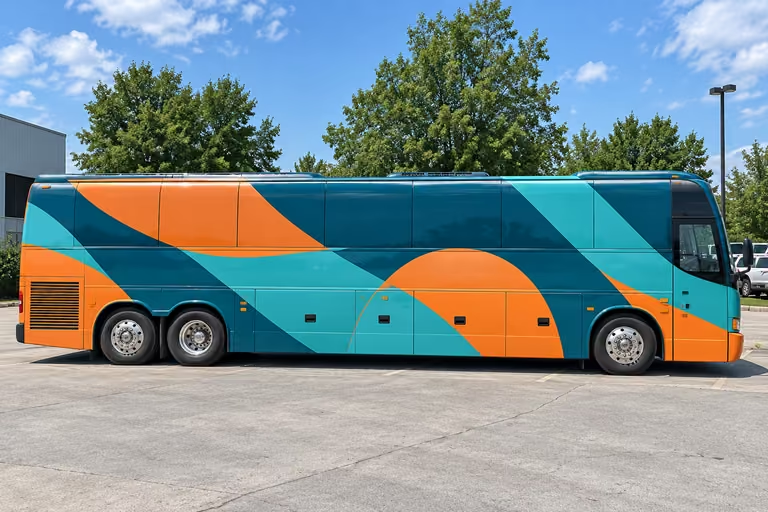
A bus wrap is a large printed vinyl graphic applied right over a bus's exterior, so the sides, the rear, and sometimes even the windows carry one continuous design. Transit agencies sell bus wraps as advertising space, businesses use them to brand employee shuttles and team buses, and tour groups use them to stand out in a parking lot full of plain white buses. In this guide, you'll learn the types of bus wraps, the difference between cast and calendered vinyl, how long bus wraps last, what drives the cost, and how to wash one without lifting the edges. You'll also find the federal rules that decide where graphics can and can't go on a bus. The lifespan, washing, and installation numbers come straight from 3M and Avery Dennison's own product bulletins, and the rules come from the Code of Federal Regulations, with a link right next to each fact.
And when you just need a great bus for your group (wrapped or not), Partybus.com makes it easy to find and book one! Browse sprinter vans, 15-35 passenger minibuses, party buses, and 56 passenger charter buses from a large network of independent transportation providers, plus the rest of the bus types you can book. Fill out the quick form for pricing and vehicle photos in about 30 seconds (no account needed), or call 877-563-2133 and talk it through!
What Is a Bus Wrap? The Short Answer
A bus wrap is adhesive vinyl film that gets printed with your design, covered with a clear protective layer, and applied directly to the bus body in panels. A full wrap goes all the way around, and the City of Green Bay's transit advertising sizes page describes full wrap ads as covering the entire bus, windows included. Smaller jobs count as bus wraps too, from one big panel between the wheels to a logo next to the door.
Vinyl isn't the only way to put graphics on a bus, either. National RTAP's guide to bus wraps and branding, a program of the Federal Transit Administration, notes that vehicle graphics can be painted on, applied as cut vinyl, or installed as full vinyl bus wraps. On new vehicles, it says the main background colors are often painted, while smaller details like logos and text may be cut adhesive vinyl. So whether you're dressing up one bus or a whole group of them, you have more than one way to get the look you want!
Types of Bus Wraps: Full Wraps, Partial Wraps, Panels, and Window Film
Full Bus Wraps
A full bus wrap covers the body from front to back, and it can carry the design right across the windows with perforated film (more on that below). It's the largest graphic a bus can carry, which is why brands reach for full bus wraps on launches, tours, and campaigns that need to stand out on busy streets. Full wraps also take the most planning, since every door, rivet line, and window edge has to line up with the artwork.
Partial Wraps and King Kong Panels
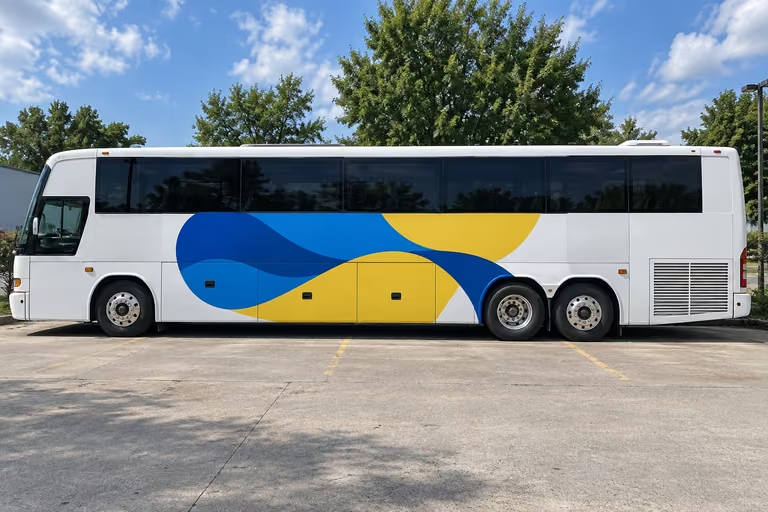
A partial wrap covers only part of the bus, like the rear, the lower half, or one large section of each side. The same Green Bay page describes King Kong ads as large graphics placed on the sides of the bus from top to bottom between the wheels. That's a lot of visibility without covering every square inch!
Partial wraps are also a smart way to freshen up older buses. National RTAP suggests that agencies ordering new vehicles can paint or wrap just a portion of their older buses so they match the new ones, without spending much money on vehicles that may be retired soon.
King and Queen Bus Advertising Panels
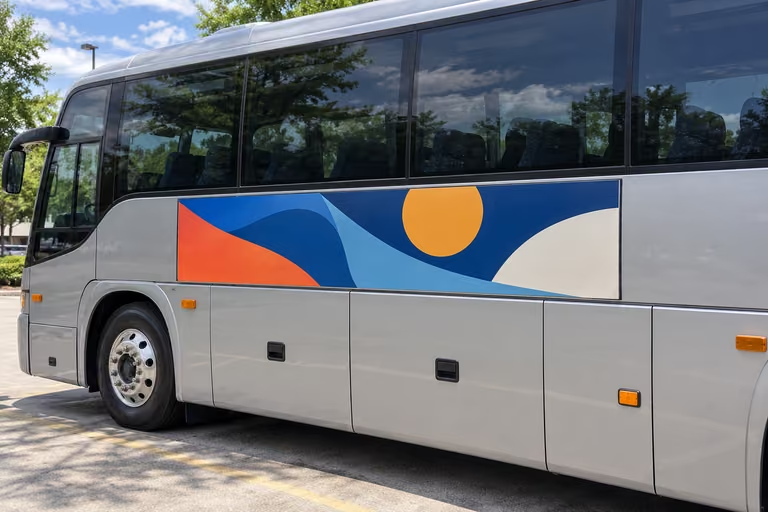
Transit advertising also comes in standard panel sizes that sit below the windows. The OAAA's king-size bus poster specs list an overall size of 30 inches high by 144 inches wide, and say a king can appear on either side of the bus. The queen-size bus poster measures 30 by 88 inches in vinyl and usually runs on the curb side. According to the OAAA, both formats can slide into an aluminum frame on the side of the bus or print on pressure-sensitive vinyl applied straight to the body.
Perforated Window Film (Window Perf)
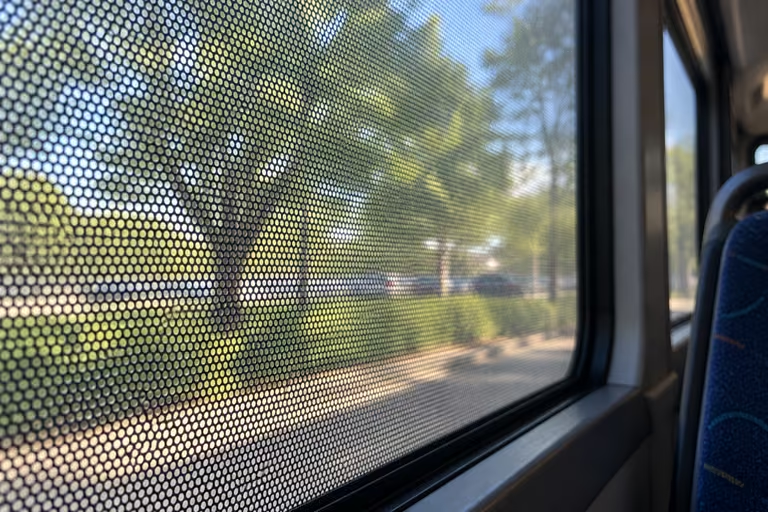
How can a bus wrap cover the windows and still let passengers see out? The answer is perforated window film, usually called window perf. 3M's product bulletin for its Scotchcal Perforated Window Graphic Film 8173 lists a 50% open area with 1.5 mm holes, and the film is white on the printed side and black on the adhesive side. That combination lets the graphic show from outside while you can still see through the window from your seat.
3M adds a few rules of thumb for window perf. Applications that need an optically clear view should be protected with an overlaminate, the film shouldn't touch the window molding, and two panels meeting on one window should form a butt seam instead of overlapping.
What Are Bus Wraps Made Of? Cast vs Calendered Vinyl
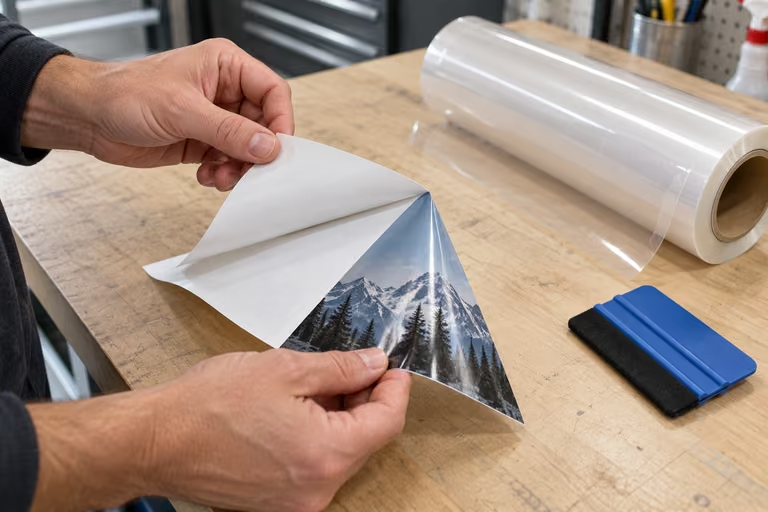
Most bus wrap film is vinyl, and the two kinds you'll hear about are cast and calendered. The easiest way to see the difference is to look at what each film is rated for in its maker's own bulletin.
3M's product bulletin for Print Wrap Film IJ180mC describes a cast vinyl about 0.05 mm thick without adhesive, and it lists bus graphics as a recommended use. It's rated for flat surfaces, rivets, simple curves, compound curves, corrugations, and deep channels, which covers just about everything you'll find on the body of a charter bus. The bulletin explains that Controltac technology lets the film slide and reposition before it's pressed down, while Comply technology gives air a channel out to the edge of the graphic. Translation: trapped air has a way out instead of hiding under your design!
Avery Dennison's cast option is built for the same kind of job. The MPI 1105 Easy Apply RS data sheet lists a 50 micron gloss white cast vinyl with an outdoor life of up to 10 years unprinted, removability for up to 5 years, and ratings for rivets, compound curves, and corrugations.
Calendered film shows up in a different spot. The 3M window perf mentioned above is a calendered vinyl, and its bulletin lists flat surfaces as the only surface type, with 3M specifically not recommending it for anything other than flat surfaces. One more layer matters, too. That same bulletin says any printed graphic exposed to abrasive conditions, including vehicles, must include graphic protection in order to be warranted, so the clear top layer is part of the plan for a bus wrap, not an extra.
How Long Do Bus Wraps Last?
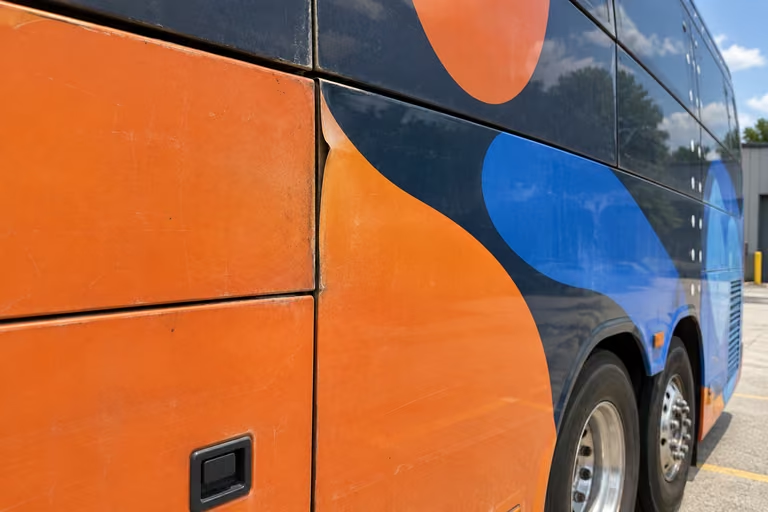
A bus wrap made with a cast film can last for years, but the exact number depends on the film, the color, and how much sun it sees. 3M's IJ180mC bulletin lists an expected performance life of 10 years for white film, 8 years for transparent, and 6 years for metallic. Those figures are for unprinted film with no graphic protection on a flat, vertical outdoor surface in Northern European climate conditions, so a printed bus wrap riding around under strong sun is a different situation.
Window perf wears out much faster. The 8173 bulletin lists 12 months of durability for vertical outdoor use, so plan on the window film being the first part of your bus wrap to need replacing. The top of the bus takes a beating, too. 3M's December 2024 maintenance instruction bulletin says vinyl graphics, just like paint, are degraded by prolonged exposure to sun and pollutants, particularly on horizontal surfaces like the hood, trunk lid, and roof.
Some aging is normal no matter which film you choose. The IJ180mC bulletin says outdoor graphics gradually lose gloss, shift slightly in color, lift a bit at the edges or around rivets, and eventually show a minor amount of cracking, and 3M doesn't treat those changes as product failure.
Bus Wrap vs Paint vs Magnetic Signs
Trying to decide between a wrap, a fresh paint job, or a simple sign on the door? Here's how the options stack up, based on what federal transit guidance and the film makers actually say.
Durability
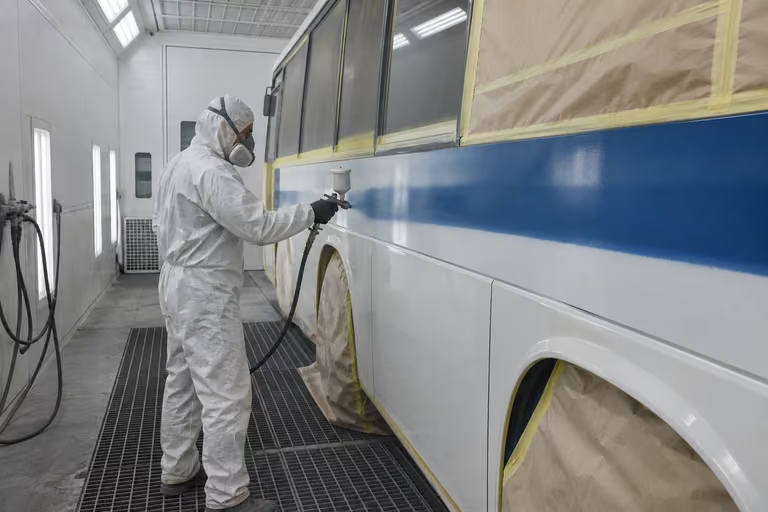
National RTAP says painting the graphics will generally be a longer-lasting, more durable solution. A bus wrap ages at its edges, around rivets, and on the roof over time, while paint is part of the body finish itself.
Winner: Paint
Up-Front Cost
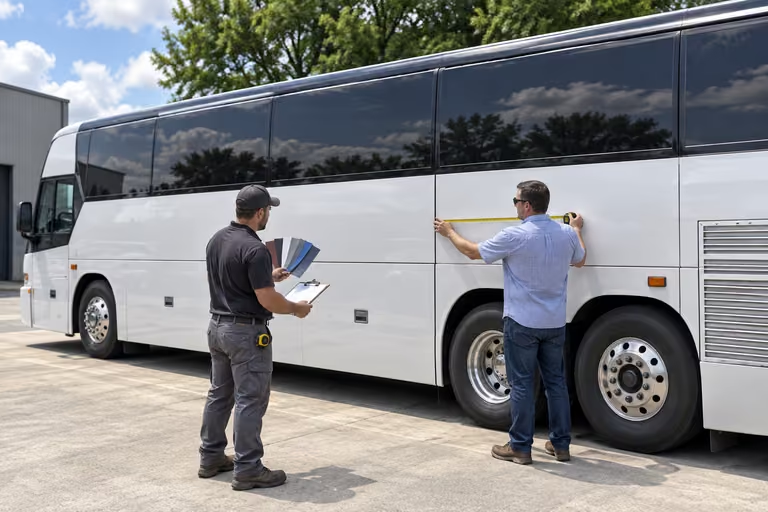
The same RTAP page notes that paint may be more expensive up front, and that the cost, advantages, and disadvantages can depend on whether you're branding new vehicles or an existing fleet.
Winner: Wrap, depending on the job
Changing Your Design Later
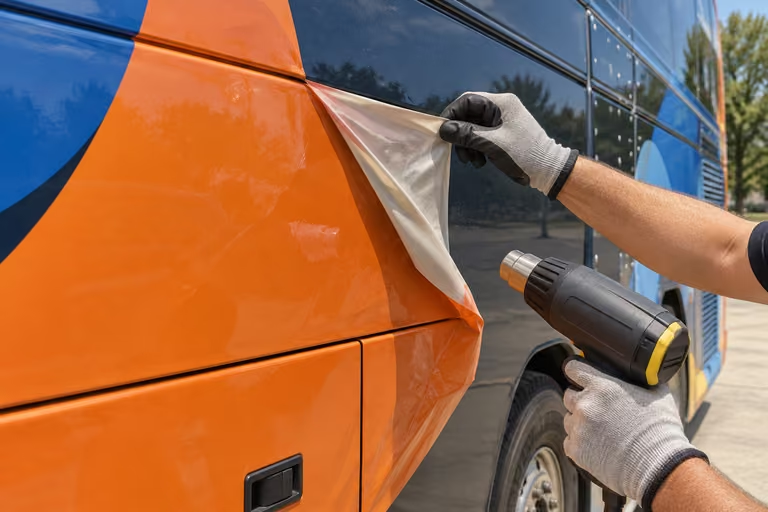
Bus wraps are designed to come off when the campaign ends or the brand changes (the removal section below walks through how). Changing a painted design means another trip to the paint booth.
Winner: Wrap
Windows
Paint doesn't go on glass, but perforated window film does, which lets a bus wrap carry the design straight across the windows within the federal window rules covered below.
Winner: Wrap
Magnetic Signs
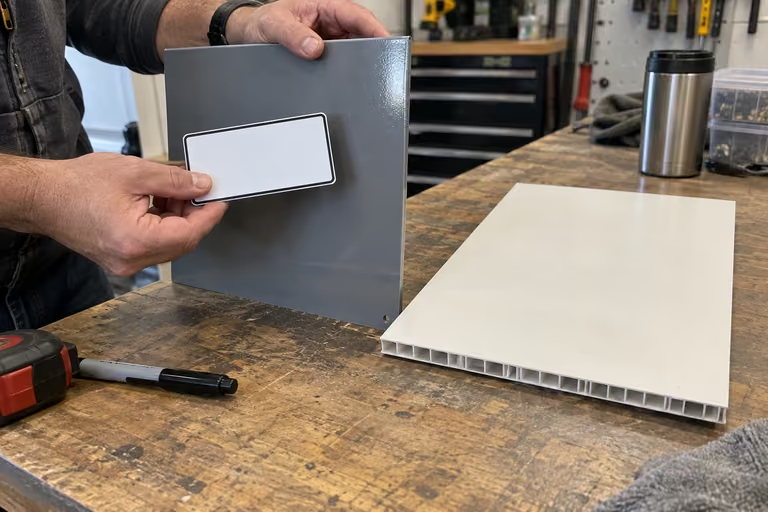
Magnetic signs look like the easy option, but a magnet needs a steel panel to grab onto. MCI's J4500 CHARGE brochure lists the body material as fiberglass composite, so on a charter bus built like that, cut vinyl lettering or a partial wrap is the way to put your name on the side.
Winner: Cut vinyl or a partial wrap
How Much Does a Bus Wrap Cost?
Bus wrap cost doesn't come from a single price chart, because every quote is built around your bus, your design, and your film choices. What you'll pay comes down to how much of the bus you cover, which films go on it, and how much work it takes to prep and install.
Size comes first. A full wrap covers far more square footage than a king-size panel or a logo by the door (the numbers section below shows just how much more). Every extra square foot means more printed film, more overlaminate, and more installation time. Film choice comes next. A cast film rated for rivets and curves, a clear overlaminate, and a separate perforated film for the windows are three different materials on one quote. Window perf also needs replacing much sooner than the body film, so it's smart to budget for that from day one.
Prep work counts, too. If an old wrap has to come off before the new one goes on, that removal work lands on the quote as well. Running buses for a transit agency? National RTAP's rural transit advertising article points out that when an agency advertises on its own vehicles, the space comes free of charge, and production costs are usually the only expense.
Pricing the ride instead of the graphics? Take a look at party bus prices for your date, and you'll have numbers in seconds!
How a Bus Wrap Gets Installed
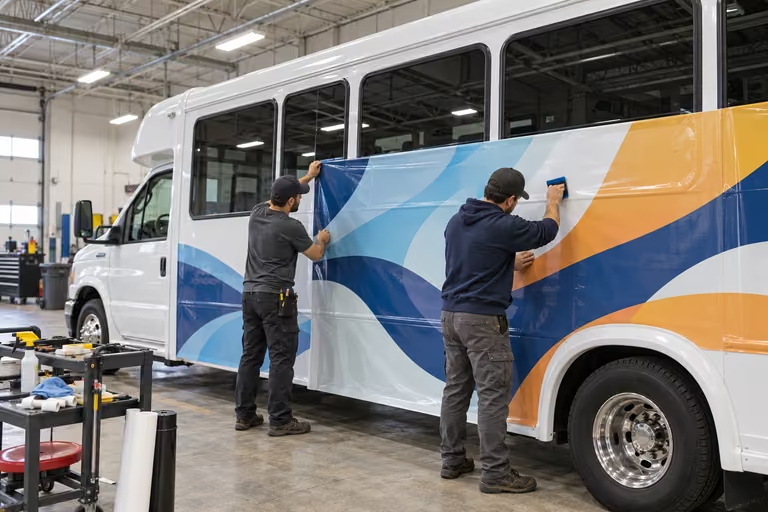
Every bus wrap starts with a template. National RTAP says the manufacturer of your vehicle should be able to provide detailed, scaled templates including dimensions, since there are too many variations in bus types and sizes for one universal template.
Next, the design gets printed, dried, and laminated, and this is where patience pays off. For its 8173 perforated window film, 3M recommends a minimum drying time of 24 hours before further processing, then at least another 24 hours before applying graphics that were laminated at room temperature.
Temperature matters on install day. The IJ180mC bulletin lists an application range of 4 to 38°C (about 39 to 100°F) on flat areas and 10 to 38°C (about 50 to 100°F) over rivets and corrugations. Compound curves need 16 to 32°C (about 61 to 90°F), and 3M recommends 18 to 22°C (about 64 to 72°F) for the easiest application.
Windows get special attention. The same bulletin warns that applying film to glass can cause the glass to break through uneven heat absorption in the sun, and 3M doesn't accept liability for that breakage. That's why the window plan deserves its own conversation with your installer. Once the bus wrap is on, hold off on the wash. 3M's maintenance bulletin says not to wash its 2080 wrap film until at least 72 hours after installation.
Federal Rules to Know Before You Wrap a Bus
A bus wrap has to share space with a few federal requirements, and planning for them early keeps your artwork from needing a redo. Here are the rules that shape bus wrap design the most.
Keep the USDOT Marking Readable
Buses operating as commercial motor vehicles carry required markings, and your bus wrap can't bury them. Under 49 CFR 390.21, the marking must appear on both sides of the vehicle in letters that contrast sharply with the background, readable in daylight from 50 feet while the vehicle is stationary.
The rule also says that if the name of any person other than the operating carrier appears on the vehicle, the words "operated by" must come before the carrier's name and USDOT number. Plan a clean, high-contrast spot on each side of the design for those markings before a single panel gets printed.
Keep the Windshield and Front Side Windows Clear
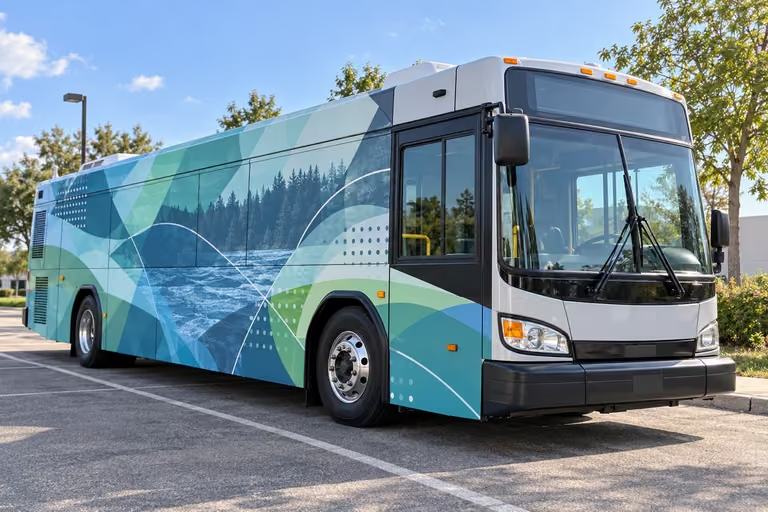
Window graphics have limits, too. 49 CFR 393.60 allows coloring or tinting on the windshield and the windows immediately to the right and left of the person behind the wheel only when at least 70 percent of the light still passes through. That restriction doesn't apply to the other windows on a commercial motor vehicle, which leaves the passenger windows farther back as the place for window perf, subject to any state rules. 3M's 8173 bulletin puts the responsibility plainly on the user to determine and comply with the laws and standards that apply.
School Buses Play by Different Rules
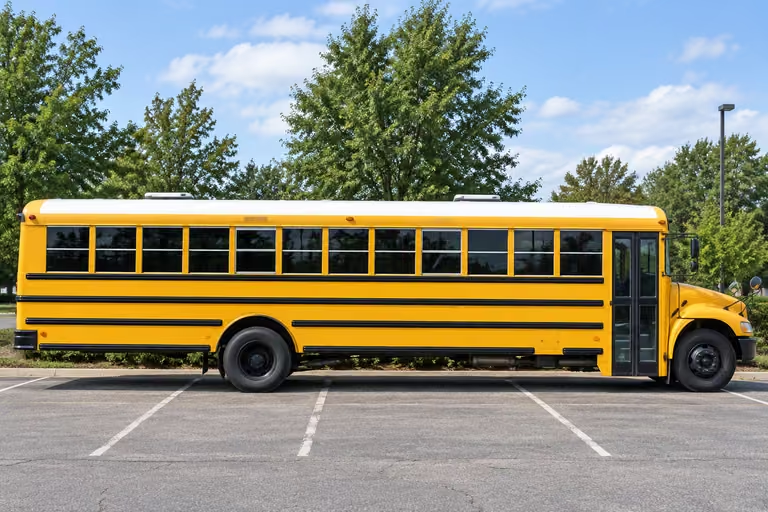
Thinking about a school bus wrap? NHTSA's school bus regulations FAQ explains that Guideline 17 recommends school buses be painted National School Bus Glossy Yellow with other uniform identifying characteristics, because that uniform look helps motorists identify school buses. Covering the yellow on a school bus is a very different project than wrapping a charter bus. For class trips, you can skip that question completely with a school event bus rental of a charter bus or minibus found through the network!
How to Wash a Wrapped Bus Without Lifting the Edges
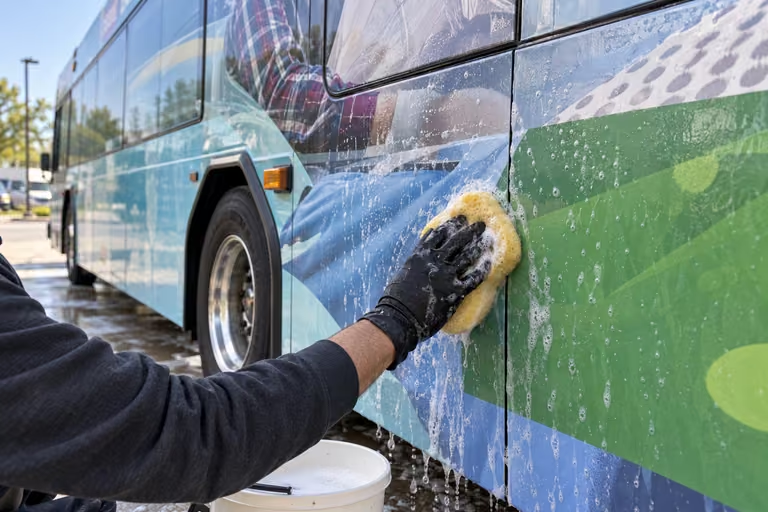
Can you wash a wrapped bus? Yes! 3M's maintenance bulletin says hand washing is best, and if the vehicle has to go through a car wash, a touchless option is the pick. Brushes are the problem, since 3M notes they can catch a loose edge of the graphic and dull its finish.
Pressure washing is allowed with limits. 3M's guidelines call for a spray nozzle with a 40 degree or wider pattern and a tip guard, a maximum pressure of 1,200 psi, and heated water no hotter than 140°F. Hold the nozzle at least 12 inches away and perpendicular to the graphic (or at least 39 inches away at a 60 degree angle or higher), and never aim the stream at an edge between 0 and 60 degrees. Window perf needs even more care, since 3M says not to pressure wash perforated window graphic films without edge sealing tape.
For everyday grime, 3M points to a wet, non-abrasive cleaner made for high-quality painted surfaces, with a pH between 3 and 11. Fuel spills should be wiped off right away, and bug splatter, bird droppings, and tree sap soften up after a few minutes of soaking with hot, soapy water.
After every wash, give the edges a once-over. 3M cautions that loose graphics can tear away from a moving vehicle, and it recommends repairing, removing, or replacing any damaged graphics. Got a torn panel? 3M recommends replacing entire components or the full wrap rather than patching, since film from a different manufacturing lot and the age of the surrounding wrap can make a repaired section look different.
How Bus Wraps Get Removed
Taking off a bus wrap is mostly heat and patience. The IJ180mC bulletin says the film can be removed with the aid of heat and/or chemicals, while the 8173 window perf is listed as removable without heat or chemicals from supported substrates.
Timing matters, too. Avery Dennison lists MPI 1105's removability at up to 5 years, and 3M's maintenance bulletin says that if graphics start to discolor or turn brown, they should come off immediately to avoid staining the paint underneath.
Leftover adhesive is the last step. 3M's Instruction Bulletin 6.5 on storage, handling, maintenance, and removal walks through applying an adhesive remover and giving it time to penetrate. From there, the softened adhesive gets scraped off with a plastic applicator or rivet brush and picked up with a cloth saturated in remover.
Bus Wrap Design Tips That Work on the Road
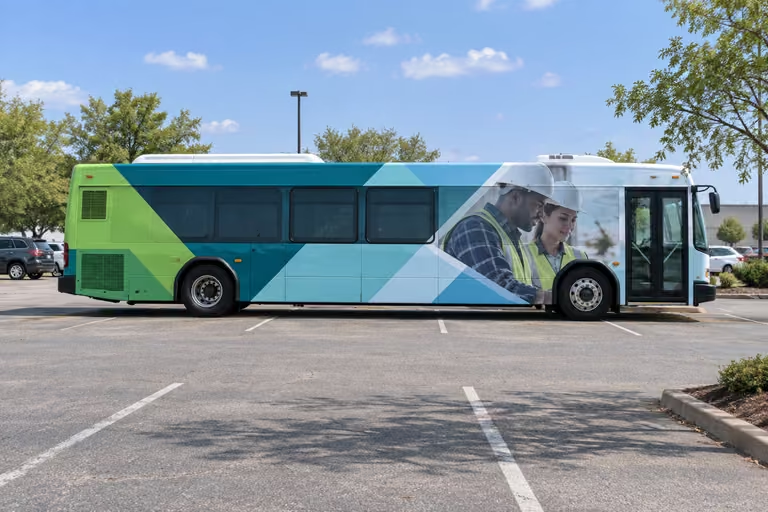
A bus wrap only works if people can take it in as the bus goes by. National RTAP's tips for transit branding make a smart checklist for any bus. Put your logo in prominent spots on the sides and rear (and on the front if there's room), and make your phone number and website big enough to read from a distance.
RTAP also recommends using the same base color on the front of the vehicle so people recognize the bus coming toward them, and keeping every vehicle looking substantially the same even across different sizes. That second tip matters a lot if your program runs a minibus and a full-size charter bus side by side.
Build the required markings into the art instead of slapping them on top. With the USDOT marking rules above in mind, a clean band of solid color on each side keeps that text legible without fighting the graphics behind it. Mind the panel edges, too. For the king-size poster, the OAAA lists a copy area of 27 by 141 inches, so keep your text inside that smaller box. And if you love a metallic look, the IJ180mC bulletin notes that 3M's silver metallic film can show a directional appearance, so its panels shouldn't alternate between lengthwise and widthwise.
Bus Wraps by the Numbers
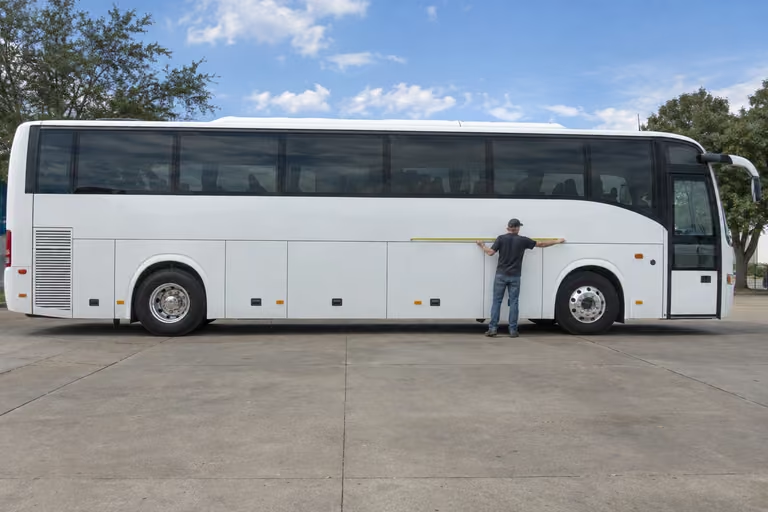
Line up the official specs side by side, and some eye-opening numbers jump out! MCI's brochure lists the J4500 CHARGE at 45.58 feet long with a roof height of 140.75 inches. That makes each side a rectangle of roughly 535 square feet before you subtract the windows, doors, wheel wells, and the gap under the body.
A king-size bus poster works out to exactly 30 square feet, so one side of that bus holds nearly 18 king posters' worth of area, or about 29 queens. Wrap both sides and you're planning around roughly 1,069 square feet of rectangle, which is why a full bus wrap and a pair of panels live in completely different price ranges.
The numbers behind install day are just as telling. On compound curves, the IJ180mC application range spans only about 29 degrees Fahrenheit, less than half of the roughly 61-degree span allowed on flat areas, so the curvy parts of a bus set the schedule. And with a 50% open area on 3M's 8173 window perf, half of every window you wrap is holes, which is worth remembering before you place small text across the glass.
Can You Rent a Wrapped Party Bus or Charter Bus?
Wondering if you can book a bus that already has a custom look? Partybus.com is a website where you find and book party buses, charter buses, minibuses, and sprinter vans from independent transportation providers across the country. The exterior of each bus is up to the provider that owns it. Because Partybus.com isn't a bus company, you can compare options across many bus companies instead of one lot, so your results show all kinds of colors and styles. Why limit yourself to one fleet?
A brand-new bus wrap is a bigger ask than a new playlist, though. Between printing, drying, laminating, and waiting out the no-wash period after install, custom graphics fit long-term plans like a recurring corporate shuttle or a season of sporting event bus rentals better than a one-night party. Planning a wedding? You can ask about exterior colors like white, black, or silver when you request your quote for a wedding bus rental, since availability varies by bus.
Online results may not show every bus that's out there, so if you're after something specific (like a branded look for a company program), call 877-563-2133 and a live agent will dig into what's available for your dates. Partybus.com has been online since 1999, and it has always been about buses.
Frequently Asked Questions About Bus Wraps
How much does it cost to wrap a charter bus?
It depends on how much of the charter bus you cover and which films you pick, so the only accurate number is an itemized quote for your specific bus. A full wrap uses far more material than a partial wrap or a pair of king-size panels, and window perf, overlaminate, and removing any old graphics each add to the total.
Can a bus wrap go over the windows?
Yes, using perforated window film, as long as the windshield and the side windows next to the steering wheel keep the 70 percent light transmission that federal rules require for tinted glazing. Passenger windows farther back aren't covered by that federal limit, though state rules can still apply.
Can you take a wrapped bus through a bus wash?
You can, but hand washing is 3M's first choice and a touchless wash beats a brush wash. If you use a pressure washer, stay at or under 1,200 psi, keep the nozzle a foot or more from the film, and skip pressure washing on window perf that doesn't have edge sealing tape.
How long does a bus wrap last?
Cast wrap films carry multi-year ratings, with 3M listing up to 10 years for white IJ180mC and Avery Dennison listing up to 10 years unprinted for MPI 1105 under their stated test conditions. Printed graphics, strong sun, the roof, and the window film all wear faster than those best-case figures.
Is it cheaper to paint or wrap a van?
A wrap often wins on the first bill, because RTAP's guidance puts paint at a possible higher starting cost, while paint wins on how long it lasts. If you expect to change your branding in a few years, a removable wrap keeps your options open.
Who owns the buses you book through Partybus.com?
Independent transportation providers do, and that's what makes the site so useful! You find and book through one website, while each provider decides how its own buses look inside and out.
Find and Book Your Next Bus Rental With Partybus.com
Now you know what goes into a bus wrap, from the film and the federal markings to the wash rules! When it's time to get your group moving, Partybus.com helps you find and book the right bus for any headcount in more than 1,000 cities. Call 877-563-2133 any day of the year for help with your trip, or fill out the online form to see pricing and photos in seconds!